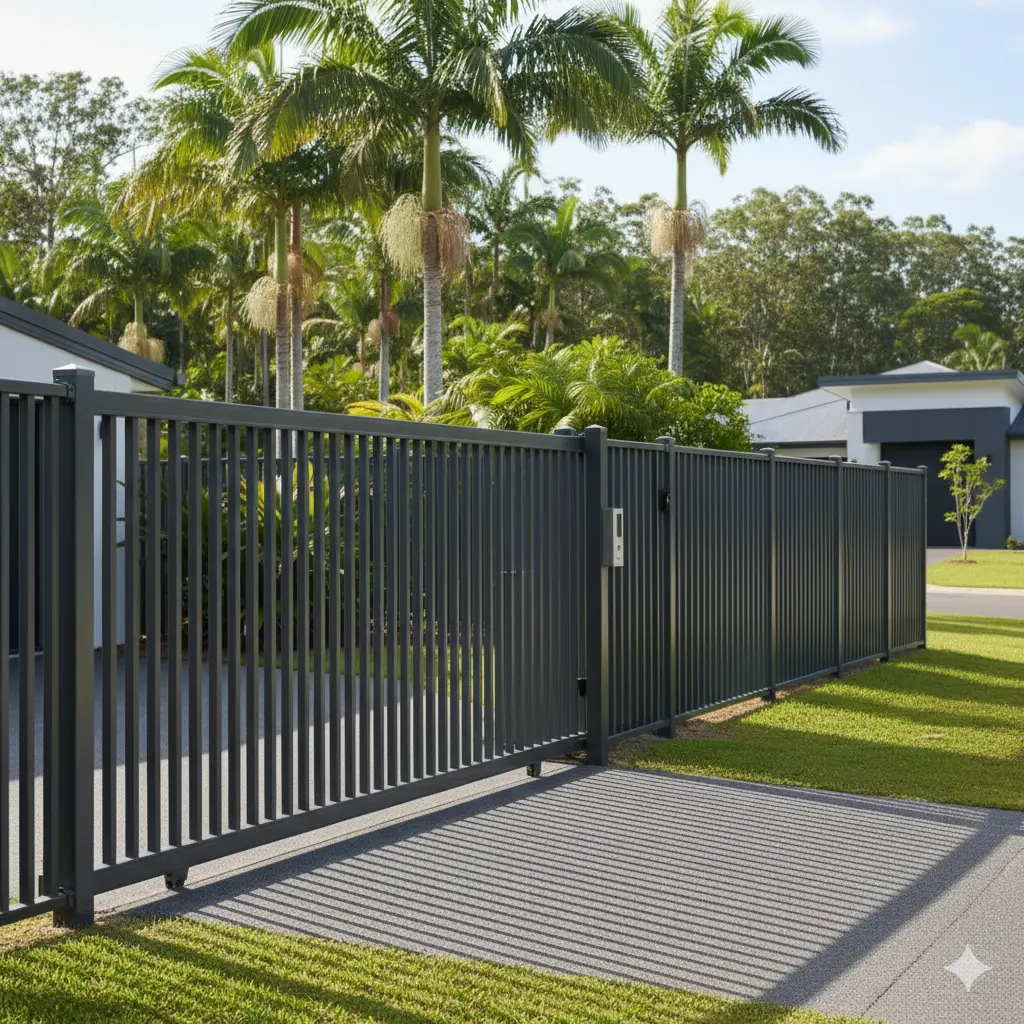
Swimming pool ownership in Cairns brings enjoyment and lifestyle benefits alongside serious legal responsibilities that every property owner must understand and fulfil. Queensland maintains some of Australia’s strictest pool safety regulations, designed to prevent tragic drowning incidents that continue to affect families across the state. Understanding these requirements protects both children and property owners from potentially devastating consequences.
The regulatory framework governing pool barriers in Queensland differs significantly from other Australian states, incorporating specific modifications to national standards that reflect local conditions and safety priorities. Cairns property owners must navigate multiple layers of legislation including the Building Act 1975, Queensland Development Code Mandatory Part 3.4, and Australian Standard AS1926.1-2007. Professional pool fencing installation ensures compliance with all applicable standards while providing durable protection suited to the region’s tropical climate.
Understanding Queensland Pool Safety Legislation
Queensland pool safety laws apply to all regulated pools regardless of construction date, with a comprehensive regulatory framework administered by the Queensland Building and Construction Commission and local councils. A regulated pool includes any structure capable of being filled with water to a depth of 300mm or more and used primarily for swimming, wading, or similar activities. This definition encompasses permanent in-ground pools, above-ground pools, portable pools meeting capacity thresholds, and spa pools including those with lockable covers.
The Queensland Development Code Mandatory Part 3.4 serves as the primary regulatory instrument governing pool barriers throughout the state. This code modifies and works in conjunction with Australian Standard AS1926.1-2007 and AS1926.2-2007, creating Queensland-specific requirements that address local safety priorities and environmental considerations. Property owners cannot simply adopt standards from other states, as Queensland maintains unique provisions regarding barrier heights, non-climbable zones, gate specifications, and temporary fencing allowances.
Exemptions from pool safety requirements exist only in extremely limited circumstances. Property owners with disabilities may apply to Cairns Regional Council for exemptions if compliant fencing would prevent reasonable pool access, though such applications require substantial evidence and council approval remains discretionary. Properties exempt under historic provisions maintain those exemptions only if pool barriers remain unmodified and in good repair. Any alterations to existing barriers trigger requirements for full compliance with current standards, eliminating legacy exemptions that may have applied under previous legislation.
The phase-in period for existing pools concluded in December 2015, meaning all regulated pools in Cairns must now meet current safety standards regardless of original construction date. Pool owners who purchased properties with non-compliant barriers inherited legal responsibility for achieving compliance, with councils empowering inspectors and enforcement officers to issue notices requiring rectification work. Penalties for non-compliance include substantial fines reaching thousands of dollars, potential criminal charges in cases of serious breaches, and civil liability exposure if injuries or fatalities occur due to inadequate barriers.
Mandatory Barrier Height and Construction Standards
Pool barriers must maintain a minimum height of 1200mm measured vertically from the finished ground level or permanent stable surface at all points around the perimeter. This measurement requirement becomes particularly important on sloping sites where ground levels vary, with the 1200mm minimum applying at every measurement point rather than averaging across the fence line. Professional installation by qualified fencing contractors ensures accurate height compliance across challenging terrain common in Cairns properties.
Boundary fences forming part of pool barriers face more stringent requirements, with minimum heights of 1800mm on the non-pool side measured from the higher ground level. This increased height prevents climbing attempts from outside the property while maintaining the standard 1200mm minimum on the pool side. The substantial height difference addresses climbing risks from elevated positions such as retaining walls, garden beds, or accumulated soil that raises external ground levels over time. Property owners must monitor boundary fence heights regularly as landscaping changes and natural ground level increases can reduce effective barrier height below legal minimums.
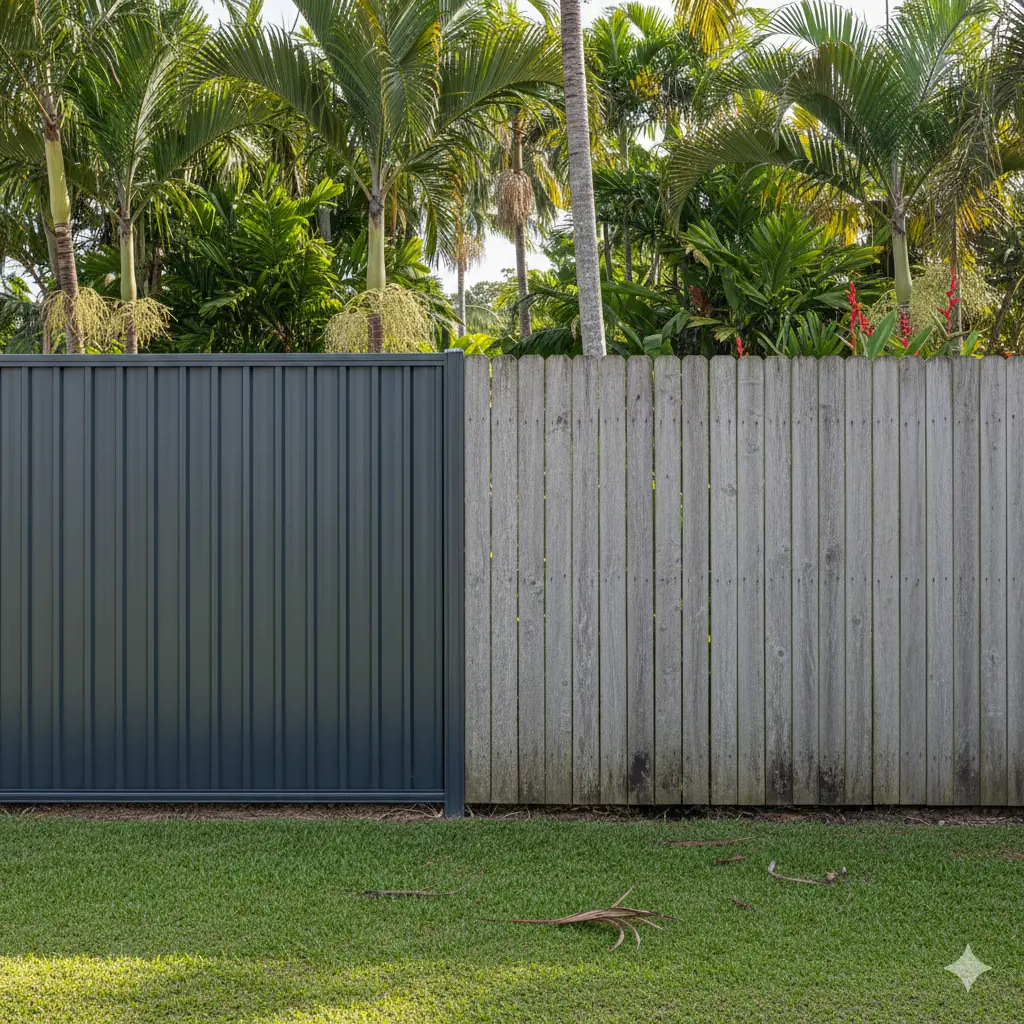
Ground clearance beneath pool barriers cannot exceed 100mm at any point around the perimeter. This restriction prevents young children from crawling under fences to access pool areas, requiring professional installation methods that accommodate uneven ground, drainage requirements, and vegetation management. Gaps between vertical barrier elements face similar restrictions, with maximum spacing of 100mm between palings, slats, or mesh openings throughout the barrier height. These specifications apply regardless of fencing material, whether Colorbond steel, timber, glass, or mesh construction.
Barrier strength and rigidity requirements ensure fencing systems withstand deliberate climbing attempts, accidental impacts, and environmental stresses including tropical storm winds affecting Cairns properties. All barrier components including posts, rails, panels, and fixings must comply with strength testing protocols detailed in AS1926.1 Appendix A. Inferior materials or substandard installation methods frequently fail these strength requirements, with flexible fencing materials, undersized posts, or inadequate footings creating compliance failures during professional inspections. Quality fencing contractors specify appropriate materials and construction methods that deliver both safety performance and long-term durability in Cairns’ demanding climate.
Non-Climbable Zone Requirements
The non-climbable zone provisions represent some of Queensland’s most technically complex pool safety requirements, with detailed specifications governing barrier design and surrounding area management. These zones prevent young children from gaining sufficient footholds or handholds to scale pool barriers, addressing the reality that determined children can exploit surprisingly small climbing aids. Understanding and maintaining non-climbable zones requires ongoing property management beyond initial installation compliance.
NCZ 1 establishes a 900mm vertical plane on the outside face of barriers, requiring this zone remain free of horizontal rails, protrusions, or other features that could assist climbing. This provision effectively prohibits traditional paling fence designs with exposed horizontal rails on the exterior face, though internal rail placement remains acceptable. Barrier designs must either eliminate horizontal members from the outside face entirely or space them at intervals exceeding 900mm, measured from the top of one rail to the top of the next. Professional barrier design balances aesthetic preferences with these technical requirements to create visually appealing installations that maintain full compliance.
NCZ 2 creates a curved zone extending 900mm from the top of the vertical non-climbable zone, measured in an arc shape towards the ground. This curved zone prevents climbing strategies that use objects placed near fencing to gain initial elevation before scaling the main barrier. Property owners must ensure no fixed objects, landscaping features, or stored items encroach within this arc-shaped zone, recognising that bicycles, outdoor furniture, potted plants, air conditioning units, and garden ornaments commonly create compliance breaches. The curved measurement means objects positioned some distance from the fence base may still violate requirements if they provide climbing assistance when combined with barrier features.
Boundary fences meeting the 1800mm height requirement face modified non-climbable zone provisions, with the 900mm zone measured from the inside pool-side face rather than the external face. This arrangement acknowledges that boundary fences serve dual purposes and external-side features may relate to neighbouring properties beyond the pool owner’s control. However, pool-side features remain strictly controlled, requiring removal or modification of any climbable objects including garden beds, retaining walls, storage boxes, or permanent fixtures within the 900mm zone measured from the pool side of boundary fences.
Vegetation management forms an essential component of non-climbable zone maintenance, with tree branches, thick shrubs, climbing plants, and dense foliage all potentially providing climbing assistance if allowed to encroach within prohibited zones. Property owners must trim vegetation regularly to maintain clear zones, recognising that tropical plant growth rates in Cairns necessitate more frequent maintenance compared to temperate regions. Professional landscaping guidance helps property owners select appropriate species and placement that enhances outdoor living areas without compromising pool safety compliance.
Gate Specifications and Latch Requirements for Pool Fencing
Pool gates require precise specification to prevent unauthorised access by young children while allowing convenient operation for adults and older children. Queensland regulations mandate gates open outward away from pool areas through their complete arc of travel, eliminating inward-opening designs that children might force open by leaning against gates from the pool side. This requirement occasionally necessitates modification of property access patterns or gate relocation to accommodate outward-opening operation without interfering with pathways, landscaping, or other site features.
Self-closing mechanisms must return gates to fully closed positions from any point in their arc of travel without requiring manual force or assistance from gravity. Acceptable self-closing devices include hydraulic closers, spring-loaded hinges, and weighted systems that reliably close gates regardless of opening angle. The mechanism must function effectively across its full operating range, with gates closing smoothly from barely-open positions as well as when fully opened. Regular testing and maintenance ensure continued reliable operation as components wear or require adjustment over time due to environmental exposure in Cairns’ humid climate.
Self-latching devices must engage automatically as gates close, securing the closure without requiring manual operation of any latch component. The latch mechanism must resist opening attempts by young children while remaining operable by adults and older children from the non-pool side only. Queensland Building and Construction Commission guidelines specify latch placement and design requirements that balance security with accessibility, preventing young children from manipulating latches through reach, visual observation, or persistent attempts.
Latch height and release mechanism placement follow specific requirements depending on gate configuration and latch type. For latches positioned less than 1500mm above ground level, release mechanisms must be located at least 1500mm above the bottom of the gate or mounted on the pool side of the gate, preventing young children from reaching or manipulating release mechanisms from the non-pool side. Latches positioned 1500mm or higher above ground level face fewer restrictions as their elevation places them beyond the reach of young children. Magnetic latches, electronic locks, and specialty latch systems all require evaluation for compliance with self-closing and self-latching requirements before installation.
Gate construction must meet the same strength, height, and spacing requirements as barrier sections, with vertical gap spacing, ground clearance, and overall height matching adjacent fencing. Gates cannot incorporate features that might facilitate climbing, including decorative elements, handles positioned within non-climbable zones, or horizontal members spaced closer than 900mm apart. Professional gate installation ensures proper alignment, smooth operation through the complete arc of travel, and reliable self-closing and self-latching performance that maintains safety function over years of regular use.
Pool Safety Certificates and Registration Requirements
All regulated pools in Queensland must be registered with the Queensland Building and Construction Commission in the Pool Safety Register, a state-wide database tracking pool locations and safety certificate status. Registration carries no fee but remains legally mandatory regardless of pool age, type, or current compliance status. Property owners can verify registration status and complete registration online through the QBCC portal, with penalties applying for failure to register pools within the required timeframes. The register enables councils and regulatory authorities to track pools within their jurisdictions, supporting enforcement activities and safety compliance monitoring.
Pool safety certificates become mandatory when buying, selling, or leasing properties with regulated pools, with different validity periods depending on pool classification. Non-shared pools serving single-family residences receive certificates valid for two years from the inspection date, while shared pools in unit complexes, townhouse developments, or multi-tenancy properties receive certificates valid for one year only. Certificate requirements apply to property transactions and new tenancy agreements, with sellers or landlords responsible for obtaining valid certificates before settlement or lease commencement.
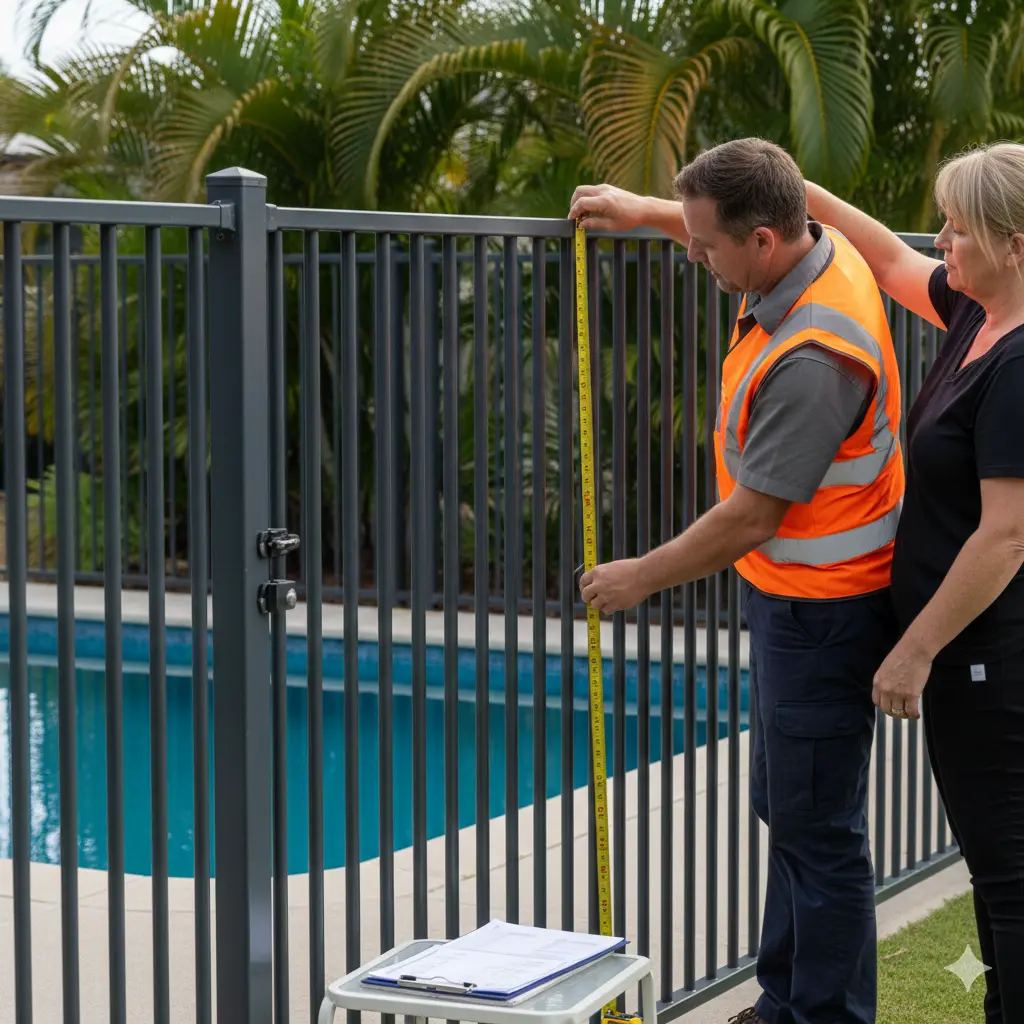
Only licensed pool safety inspectors authorised by the QBCC can issue pool safety certificates following thorough inspection of all barrier components, gate mechanisms, surrounding areas, and compliance with current standards. Inspectors examine fence height at multiple points, measure non-climbable zones, test gate closure and latching mechanisms, identify climbable objects within prohibited areas, and assess overall barrier condition and maintenance status. Inspections typically require one to two hours, depending on pool configuration and barrier complexity, with inspectors photographing non-compliant elements and providing detailed reports explaining required rectification work.
Non-conformity notices issued when pools fail inspection require owners to address identified deficiencies within three months using the same inspector for follow-up verification. The original inspector must conduct reinspection unless exceptional circumstances prevent their availability, with QBCC approval required for inspector changes during non-conformity periods. Owners cannot engage different inspectors seeking more favourable assessments, as regulations prohibit certificate shopping within three months of receiving non-conformity notices. This provision ensures consistent enforcement and prevents owners from avoiding necessary rectification work through repeated inspection attempts.
Some pool safety inspectors hold additional licences permitting them to perform minor repair work addressing common non-compliance issues. Authorised repairs include replacing or adjusting individual palings, fixing latch mechanisms, installing shields to address non-climbable zone violations, and other limited scope work not requiring building approval. Substantial barrier replacement or modification exceeding $3,300 in value requires engagement of appropriately licensed contractors holding relevant building trade licences. Property owners can perform some minor maintenance work themselves within specified parameters, though professional assessment ensures repairs achieve required compliance without creating new safety issues.
Building Certification and Approval Requirements
New pool construction and substantial barrier modifications require building certification from private building certifiers, with certification covering both pool structure and safety barrier compliance. Certifiers issue Form 17 Final Inspection Certificates or Form 11 Certificates of Occupancy confirming pools and barriers meet all applicable standards, with these certificates serving as initial pool safety certificates for newly constructed installations. The building certifier who issues the final certification must lodge certificate details with the QBCC for inclusion in the Pool Safety Register, creating the initial registration record for new pools.
Building approval requirements apply to barrier replacement or modification works depending on scope, cost, and structural significance. Complete barrier replacement always requires building approval, regardless of whether the new barrier duplicates the previous design or introduces different materials and configurations. Substantial alterations including height increases, gate relocations, or significant design changes also trigger approval requirements even when modifying existing compliant barriers. Minor repairs addressing specific non-compliance issues may proceed without formal approval, provided work value remains below $11,000, and scope falls within defined maintenance activities.
Property owners undertaking significant work without engaging professional contractors must obtain owner-builder permits from the QBCC before commencing construction. Owner-builder permits carry specific conditions, restrictions, and insurance requirements designed to protect property owners and subsequent purchasers from substandard construction. Permit holders assume full responsibility for achieving code compliance, with non-compliant work potentially requiring complete removal and replacement at high cost. The relatively modest expense of professional fencing installation typically represents better value than owner-builder approaches that risk compliance failures and expensive remediation.
Temporary fencing provisions allow use of temporary barriers for up to three months provided building certifiers or pool safety inspectors inspect and approve temporary installations before use. Certifiers issue Form 16 Inspection Certificates permitting temporary barrier use, with extensions available for additional three-month periods following reinspection and approval. Temporary fencing must meet the same height, strength, and safety standards as permanent barriers, prohibiting use of inadequate temporary solutions that fail to provide equivalent protection. Temporary provisions typically apply during renovation projects, permanent barrier replacement, or new pool construction, where permanent barriers await completion.
Common Compliance Failures and Rectification
Insufficient barrier height represents the most frequently identified compliance failure in Cairns pool inspections, often resulting from ground-level changes, erosion, or landscape modifications occurring after original installation. Garden beds built against fences, soil deposition from slope erosion, or turf buildup gradually reduces effective barrier height below the 1200mm minimum. Rectification requires either raising barrier height through panel extensions or lowering ground levels to restore compliant measurements, with height increases typically proving more practical and economical than extensive earthwork.
Climbable objects within non-climbable zones create widespread compliance issues as property owners accumulate outdoor furniture, equipment, and landscaping features without considering pool safety implications. Air conditioning units, storage boxes, stacked firewood, recreational equipment, and dense plantings commonly violate non-climbable zone requirements even when positioned at distances that initially appear safe. Property owners must regularly survey pool surrounds and remove or relocate any items encroaching within prohibited zones, recognising that compliance represents an ongoing maintenance responsibility rather than one-time installation achievement.
Gate closure and latching mechanism failures develop through normal wear, corrosion in Cairns’ humid environment, and inadequate maintenance of mechanical components. Self-closing devices lose tension, requiring adjustment or replacement to maintain reliable gate closure from all positions. Latch components wear, corrode, or misalign, preventing automatic latching or allowing gates to be opened without operating release mechanisms as designed. Professional gate servicing addresses these issues through component replacement, adjustment, lubrication, and realignment, ensuring continued reliable safety performance throughout the gate service life.
Horizontal rails positioned within non-climbable zones on fence exteriors violate current standards even though similar designs may have achieved compliance under earlier regulations. Modern standards prohibit horizontal climbing aids within the 900mm vertical zone, requiring shield installation, rail relocation, or complete barrier replacement to achieve compliance. Shield solutions attach solid panels or closely-spaced vertical elements over existing horizontal rails, eliminating climbing assistance while preserving the underlying fence structure. This approach often provides the most economical compliance pathway for barriers with otherwise acceptable conditions and structural integrity.
Direct access from buildings into pool areas through doors or windows creates serious compliance breaches that typically require significant rectification work. Current standards prohibit direct building access, requiring all pool area entry through compliant barrier gates. Property owners with door access must either permanently secure doors preventing opening or install compliant barrier sections and gates between the building and pool area. Window openings exceeding 100mm into pool areas require security screens, fixed louvers, or permanent closures limiting opening to compliant dimensions. These modifications occasionally necessitate building layout changes affecting internal space use and external appearance.
Professional Installation and Ongoing Maintenance
Professional fencing contractors bring essential expertise to pool barrier projects, navigating complex regulatory requirements while delivering durable installations suited to Cairns’ environmental conditions. Experienced contractors understand the interaction between Queensland Development Code provisions, Australian Standards references, and local council requirements that collectively govern compliant installations. This knowledge prevents costly errors that necessitate rework or complete reconstruction when non-compliant installations fail inspection, with professional installation typically proving far more economical than amateur approaches requiring remediation.
Site assessment and design development identify property-specific challenges requiring custom solutions beyond standard barrier configurations. Sloping terrain, boundary constraints, existing structures, underground services, and aesthetic integration all influence barrier design decisions affecting both compliance and long-term satisfaction. Professional contractors evaluate these factors systematically, developing barrier plans that achieve regulatory compliance while complementing property characteristics and owner preferences. This front-end planning investment prevents mid-project discoveries that derail timelines, inflate costs, or compromise safety outcomes.
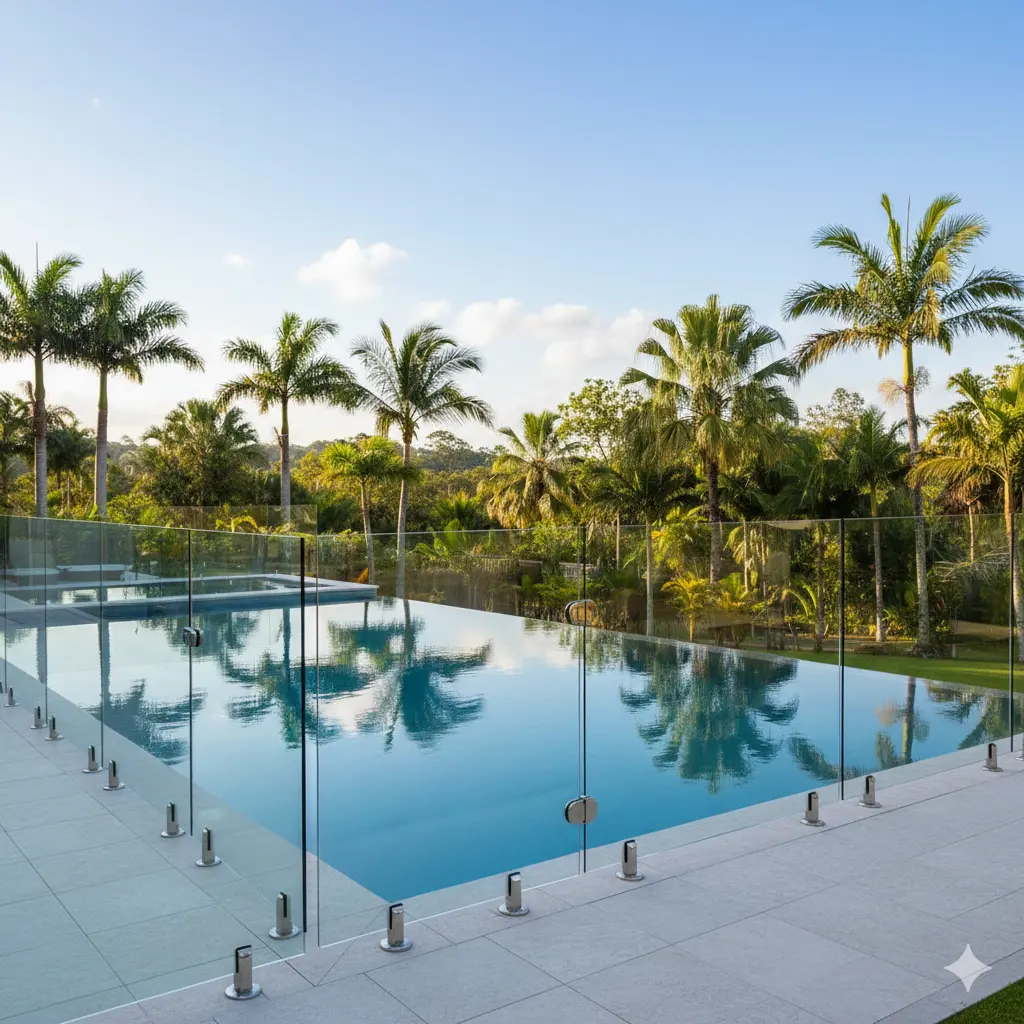
Material selection balances performance requirements, maintenance needs, aesthetic preferences, and budget constraints within the framework of regulatory compliance. Colorbond steel fencing delivers excellent durability, minimal maintenance requirements, and reliable performance in Cairns’ tropical climate, though initial costs exceed some alternatives. Glass barriers provide unobstructed pool area views while meeting strength and height requirements, though installation demands specialised skills and costs substantially exceed metal or timber options. Timber fencing offers natural aesthetics at moderate cost but requires regular maintenance including treatments, staining, and component replacement as timber weathers in humid conditions.
Post installation and foundation construction directly affect long-term barrier performance, with inadequate footings creating ongoing stability and alignment issues. Professional installation specifies appropriate post depths, concrete volumes, and curing periods ensuring barriers withstand wind loads, ground movement, and deliberate climbing attempts without deflection or failure. Cairns’ soil conditions including reactive clays, sandy coastal soils, and seasonal moisture fluctuations demand site-specific foundation design rather than generic installation approaches that may prove inadequate for local conditions.
Regular maintenance preserves barrier compliance and safety performance throughout the installation’s service life. Annual professional inspections identify developing issues before they create compliance failures or safety hazards, with prompt attention to minor problems preventing escalation into expensive major repairs. Property owners should conduct quarterly visual inspections, checking gate operation, latch function, barrier alignment, and identification of new climbable objects within non-climbable zones. Maintenance activities, including hinge lubrication, latch adjustment, panel repair, and vegetation management, prevent deterioration while maintaining reliable safety protection.
Property Transaction Requirements
Vendors selling properties with regulated pools must either provide current pool safety certificates to purchasers before settlement or complete Form 36 Notice of No Pool Safety Certificate advising purchasers of certificate absence. Certificates remain valid for their full term even as properties change ownership, though purchasers should verify certificates accurately reflect the current barrier condition rather than accepting potentially outdated inspection results. Some purchasers prefer obtaining new inspections before settlement, identifying compliance issues requiring vendor rectification or purchase price adjustments.
Purchasers buying properties without current certificates must obtain pool safety certificates within 90 days of settlement, with this timeframe applying regardless of barrier compliance status at purchase. The 90-day requirement creates urgency for non-compliant barriers, necessitating prompt engagement of contractors to complete rectification work and pass inspection within the limited timeframe. Purchasers should evaluate pool barrier condition during pre-purchase inspections, obtaining quotes for any required rectification work and incorporating these costs into purchase negotiations or budget planning.
Landlords leasing properties with regulated pools cannot enter tenancy agreements unless current pool safety certificates exist, with this requirement applying to new leases and tenancy renewals. Shared pool certificates remain valid for one year, requiring annual renewal throughout tenancy periods. Non-shared pool certificates remain valid for two years, though landlords must ensure certificate validity extends through tenancy periods or obtain renewals before expiration. Tenants bear responsibility for ensuring gates remain closed and latched while avoiding placement of climbable objects within non-climbable zones, though landlords maintain ultimate compliance responsibility.
Frequently Asked Questions
What pool types require compliant safety barriers in Cairns?
All pools capable of containing water to 300mm depth require compliant barriers, including permanent in-ground pools, above-ground pools, portable pools exceeding 2,000 litres capacity, and spa pools regardless of lockable cover presence. Portable wading pools avoiding barrier requirements must hold less than 2,000 litres, be incapable of 300mm water depth, and have no filtration system. Property owners uncertain about specific pool classifications should consult licensed pool safety inspectors for definitive assessments, as misclassification can result in serious compliance breaches and associated penalties.
Can I use my house walls as part of the pool barrier?
Current Queensland standards prohibit direct access from buildings into pool areas, requiring all entry through compliant barrier gates rather than doors or windows. Property owners with existing direct building access must install barrier sections between buildings and pools, incorporating compliant gates for access. Windows opening into pool areas must be modified, preventing openings exceeding 100mm, typically requiring security screens, permanent closures, or restricted opening mechanisms. This requirement applies even to properties with historic exemptions if any barrier modifications occur after the exemption grant date.
How often do pool barriers need professional inspection?
Pool safety certificates require renewal when selling or leasing properties, with non-shared pools receiving two-year certificates and shared pools receiving one-year certificates. Between mandatory certificate periods, property owners should arrange annual professional inspections to identify developing maintenance issues before they create compliance failures. Quarterly visual self-inspections help property owners monitor gate operation, latch function, and climbable object placement, with immediate professional assessment recommended when potential compliance issues appear. Proactive inspection and maintenance approaches prove far less expensive than emergency rectification when certificate requirements arise.
What happens if my pool fails a safety inspection?
Inspectors issue Form 26 Non-Conformity Notices detailing specific compliance failures and required rectification work. Property owners have three months to complete rectification and request reinspection by the same inspector, with the inspector potentially issuing additional non-conformity notices if work remains incomplete or inadequate. Property owners cannot engage different inspectors seeking more favourable assessments within three months of receiving non-conformity notices, as regulations prohibit inspector shopping during rectification periods. Failure to address non-conformity within required timeframes can result in council enforcement action, including substantial fines.
Do I need council approval to replace my pool fence?
Complete pool barrier replacement requires building certification regardless of whether new barriers replicate existing designs or introduce different configurations. Minor repairs addressing specific compliance issues may proceed without formal approval, provided work costs remain below $11,000 and scope stays within defined maintenance activities. Property owners should consult building certifiers or licensed contractors before commencing any barrier work, as inadvertent approval violations create additional compliance issues requiring costly remediation. Professional guidance ensures work proceeds through proper approval channels while achieving required safety outcomes.
Conclusion
Pool safety compliance in Cairns demands a thorough understanding of Queensland-specific regulations, professional installation expertise, and ongoing maintenance commitment throughout pool ownership periods. The regulatory framework protecting children from drowning reflects serious risks that continue claiming young lives despite decades of safety awareness and legislative development. Property owners accepting pool ownership responsibilities must prioritise compliance as both legal obligation and moral imperative, recognising that adequate barriers prevent tragedies while non-compliant installations create unconscionable risks.
For more information about fencing services at Pro Fence Cairns, check them out below: