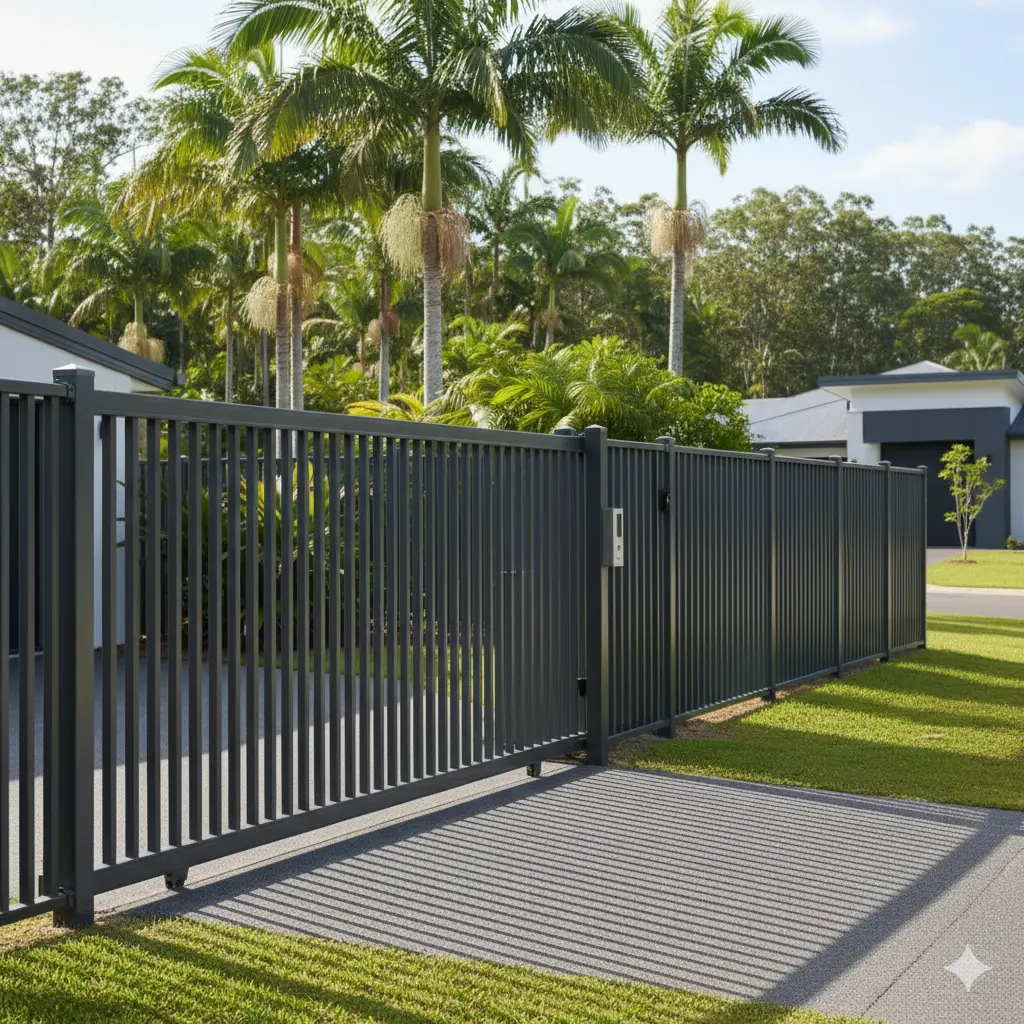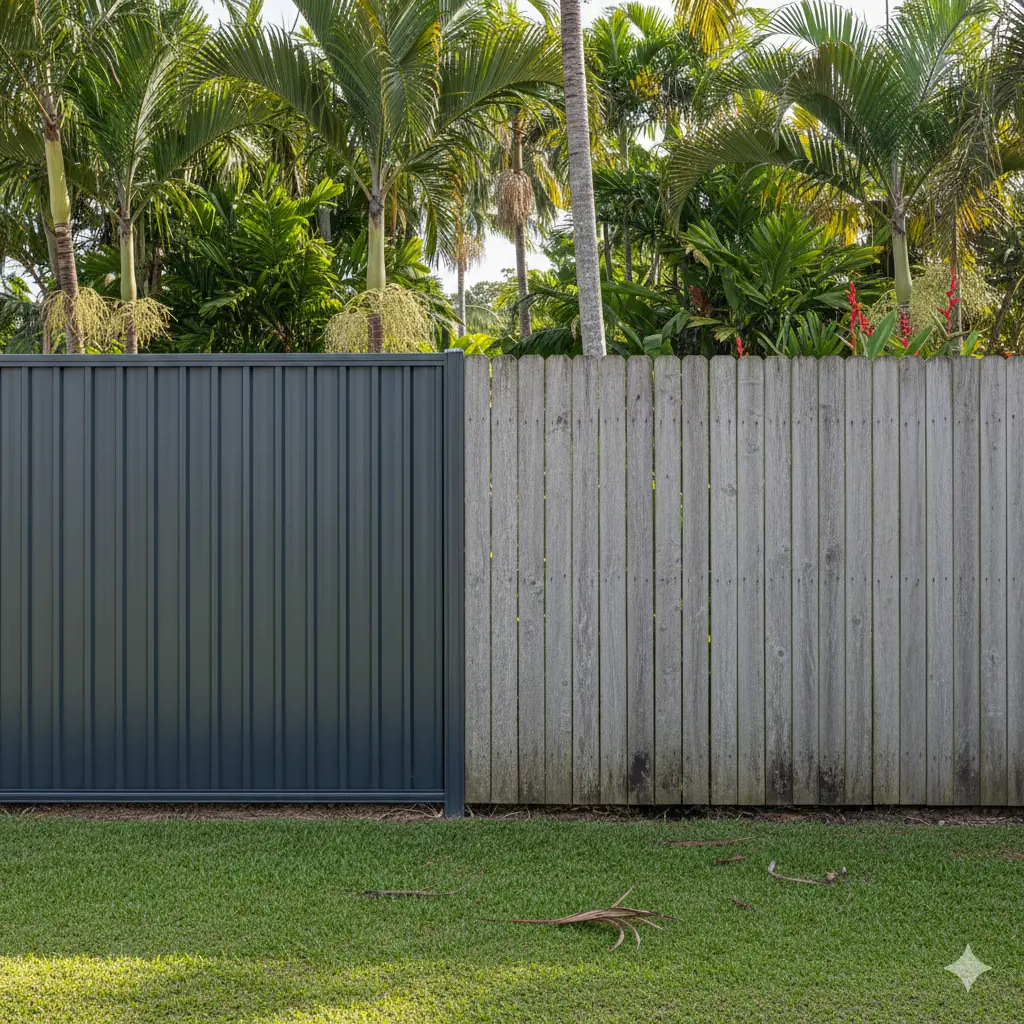
Material selection decisions profoundly impact fencing performance, longevity, and total ownership costs in Cairns’ demanding tropical environment. Property owners face critical choices between Colorbond vs. Timber Fencing, with each material offering distinct advantages and limitations shaped by Far North Queensland’s unique climate. Understanding how different fencing materials respond to intense humidity, heavy rainfall, salt exposure, and extreme temperatures enables informed decisions that balance immediate budgets with long-term value.
Cairns’ tropical climate presents exceptional challenges for outdoor structures including fencing systems subjected to year-round environmental stresses uncommon in temperate Australian regions. The Bureau of Meteorology records annual rainfall exceeding 2,000mm concentrated during the wet season from December through April, with humidity levels reaching 75% at 9am and maintaining 66% even during afternoon hours. These conditions accelerate material degradation, promote biological growth, and test structural integrity in ways that dramatically differentiate material performance over typical fencing service lives. Professional fencing contractors familiar with local conditions help property owners navigate these complex material considerations.
Understanding Cairns’ Tropical Climate Challenges
Cairns experiences a tropical climate characterized by distinct wet and dry seasons that create dramatically different environmental conditions throughout the year. The wet season from November through April delivers intense rainfall, elevated humidity, and warm temperatures that challenge material durability through sustained moisture exposure. Average monthly rainfall during peak wet season months of January and February exceeds 400mm, with individual weather systems occasionally depositing 200mm or more within 24-hour periods. This concentrated precipitation saturates fencing materials, promotes rust development in susceptible metals, and accelerates timber decay through prolonged moisture retention.
Humidity levels remain elevated year-round even during the dry season from May through October, with regional climate data showing morning relative humidity averaging 72% annually and afternoon readings maintaining 62% average across all months. These persistent moisture levels prevent complete drying between rainfall events, creating conditions conducive to corrosion, mould growth, and biological attack on organic materials. Fencing materials that absorb moisture face particular challenges, as repeated wet-dry cycles cause dimensional changes, surface degradation, and accelerated deterioration compared to installations in drier climates.
Temperature patterns contribute additional stress factors affecting fencing material performance and longevity. Mean maximum temperatures range from 31.5°C during summer months to 25.9°C during winter, with minimal daily temperature variation creating consistently warm conditions that accelerate chemical reactions including corrosion and biological decomposition. The combination of warmth and moisture creates ideal conditions for termite activity, fungal growth, and bacterial attack on susceptible materials. Property owners selecting fencing materials must account for these biological threats alongside purely physical weathering considerations.
Coastal proximity influences material selection requirements even for properties located several kilometres inland from the shoreline. Salt-laden sea breezes penetrate significant distances from the coast, depositing corrosive chloride ions on fencing surfaces that accelerate metal corrosion and degrade protective coatings. Properties within 5 kilometres of the ocean face severe marine exposure requiring materials specifically engineered for coastal environments, while locations up to 20 kilometres inland experience moderate salt deposition affecting material selection and maintenance requirements. Professional assessment of site-specific exposure conditions ensures appropriate material specifications for individual property locations.
Colorbond Steel Fencing Performance
Colorbond steel fencing manufactured by BlueScope Steel represents the premium material choice for Cairns properties requiring maximum durability with minimal maintenance demands. The steel substrate receives hot-dip coating with metallic alloy providing sacrificial corrosion protection, followed by factory-applied primer and topcoat paint systems engineered specifically for Australian climate extremes. This multi-layer protection system delivers exceptional resistance to rust development, paint degradation, and structural deterioration even under sustained tropical weather exposure over decades of service life.
The base metal substrate consists of steel with zinc-aluminium alloy coating applied through continuous hot-dip galvanizing processes that bond metallic protection directly to the steel surface. This metallic coating provides barrier protection preventing moisture and oxygen contact with underlying steel, while also delivering sacrificial protection through preferential oxidation of the zinc component. Even if the coating sustains minor damage exposing base steel, the surrounding metallic coating corrodes preferentially, protecting the steel from rust development. This self-healing characteristic proves particularly valuable in tropical environments where minor scratches or abrasions inevitably occur during installation, maintenance, or storm damage events.
Factory-applied paint systems consist of multiple layers, including chromate conversion coating for enhanced adhesion, epoxy primer providing corrosion resistance, and durable polyester topcoat delivering colour, gloss retention, and UV resistance. BlueScope’s manufacturing processes apply these coatings under controlled conditions impossible to replicate during field application, ensuring consistent thickness, complete coverage, and optimal adhesion that field-painted materials cannot match. The baked-on finish creates a resilient surface resistant to chipping, scratching, and degradation from sustained UV exposure characteristic of Cairns’ tropical latitude.
Structural performance remains consistent throughout Colorbond fencing’s service life, with dimensional stability unaffected by moisture content variations that cause timber expansion and contraction. Steel fencing maintains precise alignment, gate clearances, and fastener positions regardless of seasonal humidity changes or rainfall patterns, eliminating the warping, twisting, and binding common with timber installations. This dimensional consistency ensures gates continue operating smoothly, panels remain properly aligned, and fastener connections maintain original integrity without requiring ongoing adjustment or remediation work.
Colour permanence and gloss retention exceed timber finish performance dramatically, with factory-applied Colorbond coatings maintaining appearance characteristics decades longer than field-applied timber stains or paints. While normal weathering causes gradual gloss reduction and subtle colour shifts over extended periods, these changes occur slowly and uniformly across all exposed surfaces rather than the patchy fading, flaking, and biological staining affecting timber finishes. Property owners valuing consistent appearance throughout fencing service life find Colorbond steel delivers superior aesthetic retention compared to timber alternatives requiring frequent refinishing maintenance.
Timber Fencing Characteristics in Tropical Conditions
Timber fencing provides natural aesthetic appeal and initial cost advantages that attract property owners seeking traditional appearance or working within constrained budgets. However, timber’s organic composition creates inherent vulnerabilities to biological attack, moisture-induced deterioration, and dimensional instability that prove particularly problematic in Cairns’ tropical climate. Understanding these limitations allows realistic expectations regarding maintenance requirements, service life, and total ownership costs over typical fencing installation periods.
Moisture absorption represents timber’s fundamental vulnerability in humid tropical climates, with cellular wood structure readily absorbing atmospheric moisture and rainfall that initiates multiple degradation mechanisms. Repeated wetting and drying causes dimensional changes as timber swells when wet and shrinks during drying periods, creating stresses that loosen fasteners, open joints, and create gaps allowing moisture penetration into previously protected areas. Over time, these repeated cycles cause cumulative damage including surface checking, end splitting, and fastener withdrawal that compromise both appearance and structural integrity.
Biological attack from termites, wood-boring insects, and decay fungi presents constant threats to timber fencing in Cairns’ warm, humid environment. Subterranean termites remain active year-round in tropical Queensland, readily attacking untreated timber or installations where chemical protection has degraded through weathering and time. Lyctid borers and other wood-boring insects colonize susceptible timber species, creating extensive internal damage invisible from external inspection until structural failure occurs. Decay fungi proliferate in persistently damp conditions, breaking down wood cellular structure and reducing load-bearing capacity even when timber maintains superficially sound appearance.
Treatment requirements attempt to mitigate biological attack risks through chemical preservatives, though treatment effectiveness depends on application method, chemical type, retention levels, and ongoing maintenance. Pressure-treated timber using copper-based preservatives provides moderate resistance to termite attack and decay, though treatment effectiveness diminishes over time through chemical leaching and surface weathering. Surface-applied treatments offer minimal protection against termites capable of bypassing treated surfaces to access untreated core timber. Regular retreatment every few years becomes necessary to maintain protective effectiveness, adding ongoing cost and effort compared to materials inherently resistant to biological attack.
Finish maintenance demands represent timber fencing’s most significant ongoing cost consideration, with protective stains and paints requiring reapplication every two to four years depending on exposure conditions and product selection. Cairns’ intense UV radiation, heavy rainfall, and sustained humidity accelerate finish degradation, causing fading, chalking, flaking, and loss of water repellency that expose bare timber to accelerated weathering. Surface preparation before refinishing requires cleaning, mould removal, and possibly sanding to achieve acceptable results, consuming substantial time and effort even for modest residential installations. These recurring maintenance costs accumulate over fencing service life, often exceeding the initial material cost savings that made timber appear economical during original purchase decisions.
Comparative Durability and Service Life
Expected service life differs dramatically between Colorbond steel and timber fencing in Cairns’ tropical environment, with properly installed and maintained Colorbond installations routinely exceeding 30 years compared to typical timber fencing lasting 10 to 15 years before requiring replacement. This three-to-one longevity advantage fundamentally alters total ownership cost calculations, transforming initial price premiums into long-term value when amortized across actual service periods. Property owners planning extended ownership periods benefit substantially from durable material selection that avoids mid-term replacement projects.
Corrosion resistance represents Colorbond steel’s primary durability advantage, with BlueScope warranty coverage extending up to 30 years against perforation by weathering in natural elements when materials are properly specified for exposure conditions. Coastal Cairns properties require Colorbond steel grades engineered for marine environments, delivering enhanced corrosion protection through thicker metallic coatings and specialized paint formulations. Even in severe exposure conditions including direct salt spray deposition, properly specified Colorbond steel maintains structural integrity and appearance characteristics far longer than unprotected metals or organic materials subjected to identical conditions.
Termite immunity provides another critical advantage in tropical Queensland, where subterranean termite activity poses constant threats to timber structures. Steel fencing requires no chemical treatment, ongoing termite inspection, or protective barriers that timber installations demand for reasonable service life expectations. Property owners in areas with known termite pressure find steel fencing eliminates substantial ongoing costs and risks associated with timber protection, while also avoiding potential liability issues if timber fence failure allows property access leading to primary structure attack.
Dimensional stability ensures Colorbond fencing maintains original installation geometry throughout its service life, avoiding the warping, twisting, and movement characteristic of timber responding to moisture content variations. Gates continue operating smoothly without binding or dragging, panels maintain plumb alignment without lean or bow development, and post spacing remains consistent without the gradual migration occurring as timber posts rotate in ground embedment. This stability reduces maintenance requirements while preserving intended security and privacy functions that deteriorate as timber fencing develops gaps and alignment problems.
Weather resistance to cyclonic winds, heavy rainfall, and storm debris impact demonstrates superior performance with properly engineered steel fencing compared to timber alternatives. Colorbond steel’s high strength-to-weight ratio allows lighter framing compared to timber while maintaining or exceeding wind load resistance. The continuous steel sheets resist moisture penetration, eliminating rot development at vulnerable joints and connections, while impact resistance prevents the splintering and fracture affecting timber struck by wind-borne debris during severe weather events common to tropical coastal regions.
Maintenance Requirements and Ongoing Costs
Maintenance demands represent the most significant operational difference between Colorbond vs timber fencing, with steel requiring minimal intervention compared to timber’s intensive ongoing care regimen. Colorbond fencing maintenance consists primarily of periodic washing to remove accumulated dirt, salt deposits, and environmental contaminants that could eventually compromise coating performance if allowed to accumulate over extended periods. Six-monthly washing with fresh water satisfies manufacturer maintenance requirements for properties in coastal exposure zones, with annual washing adequate for inland locations experiencing less severe conditions.
Washing procedures require only low-pressure water application using garden hose equipment readily available to most property owners, avoiding specialized tools or professional service engagement for routine maintenance. The process takes minutes per linear metre of fencing, making complete property perimeter maintenance manageable during weekend afternoon activities. This simplicity encourages compliance with recommended schedules, maintaining warranty validity while preserving appearance and performance characteristics throughout the fencing service life.
Timber fencing maintenance escalates dramatically beyond simple washing, requiring inspection for termite activity, decay development, fastener loosening, and finish deterioration on annual or more frequent schedules. Professional termite inspections cost several hundred dollars and must occur regularly to detect infestations before extensive damage develops. Surface refinishing every two to four years involves cleaning, mould treatment, repairs to damaged sections, and application of protective stains or paints consuming multiple weekends for typical residential installations. Material costs for quality exterior finishes add hundreds of dollars per application, while labour expenses multiply costs substantially for property owners engaging professional painters rather than undertaking DIY approaches.
Repair requirements differ substantially between materials, with Colorbond steel rarely requiring component replacement outside damage from vehicle impact or similar catastrophic events. Timber fencing experiences ongoing deterioration requiring individual paling replacement, post rebuilding, and fastener renewal as original components fail through rot, termite damage, or weathering. These incremental repairs accumulate costs and effort throughout timber fencing service life, eventually reaching points where complete replacement proves more economical than continued piecemeal repairs to deteriorating installations.
Total maintenance cost analysis over 30-year ownership periods demonstrates Colorbond steel’s economic advantages despite higher initial purchase prices. Timber requiring complete replacement every 12 years necessitates two full fence rebuilds during the period one Colorbond installation serves, doubling material and installation costs before accounting for interim maintenance expenses. Adding refinishing costs every three years across 30 years totals ten complete refinishing projects, each consuming materials, time, and potentially professional service fees that accumulate to substantial sums. When these recurring costs are properly accounted and compared against Colorbond’s minimal maintenance requirements, steel fencing often delivers lower total ownership costs despite premium initial pricing.
Colorbond vs. Timber Fencing: Installation Considerations and Initial Costs
Initial purchase and installation costs favour timber fencing significantly, with material prices typically ranging 30% to 50% below Colorbond steel equivalents for comparable fence heights and configurations. This cost differential attracts budget-conscious property owners focused on immediate expenditure rather than long-term value, particularly during new construction projects where fencing competes with numerous other capital requirements. However, installation complexity and site preparation requirements sometimes offset timber’s raw material advantages through increased labour costs or foundation work.
Colorbond steel installation demands precise post positioning, accurate panel measurements, and careful handling to avoid coating damage that could compromise corrosion protection. Professional installers with specialized tools and experience deliver superior results compared to DIY approaches, though quality installation services command premium pricing reflecting skill requirements and equipment investments. Post embedment depths, concrete footing specifications, and fastener selection all affect long-term performance, making professional installation advisable despite additional costs compared to amateur timber installation attempts.
Timber installation appears deceptively simple, encouraging DIY approaches that sometimes produce acceptable results in less demanding climates but frequently fail prematurely in Cairns’ harsh tropical environment. Inadequate post embedment, insufficient concrete volume, improper drainage details, and amateur finishing application create vulnerabilities that accelerate deterioration and reduce service life below even modest expectations. Professional timber installation addressing proper drainage, appropriate post treatment, correct fastener selection, and quality finish application substantially improves performance, though labour costs approach or exceed Colorbond installation pricing while delivering inferior longevity.
Site preparation requirements sometimes differ between materials, with problematic soil conditions affecting installation approaches and costs. Reactive clay soils common in Cairns suburbs require deeper post embedment and larger concrete footings to resist seasonal ground movement, adding material and labour costs for either fencing type. However, steel fencing’s lighter weight and higher strength allow narrower posts and potentially reduced footing requirements compared to timber achieving equivalent wind resistance, partially offsetting steel’s material cost premium through reduced installation labour and concrete volumes.
Customization and design flexibility considerations sometimes influence material selection, with timber offering easier field modifications and adjustments compared to factory-fabricated steel components requiring precise ordering and minimal field alteration capability. Complex property boundaries, numerous gate locations, or unusual height requirements may favour timber’s field-adaptable characteristics, though experienced steel fence suppliers accommodate most custom requirements through proper measurement and specification during ordering processes. The convenience of field adjustment rarely justifies timber selection when properly considered against performance and longevity disadvantages in tropical environments.
Environmental Impact and Sustainability
Environmental considerations increasingly influence material selection decisions as property owners recognize sustainability implications extending beyond immediate project costs and performance. Both Colorbond steel and timber fencing present distinct environmental profiles encompassing raw material sourcing, manufacturing processes, transportation impacts, service life performance, and end-of-life disposal or recycling options. Comprehensive assessment requires examining multiple factors rather than simplistic assumptions about natural versus industrial materials.
Steel production involves significant energy consumption and carbon emissions during mining, refining, and manufacturing processes, though modern BlueScope facilities incorporate efficiency improvements and renewable energy sources reducing environmental intensity compared to historical production methods. Steel’s recyclability represents a significant environmental advantage, with scrap steel from demolished fencing recycled indefinitely without quality degradation through remelting and reformation processes. This closed-loop recycling capability means steel fencing contributes to circular economy principles, potentially incorporating recycled content from previous applications while avoiding landfill disposal at end of service life.
Timber sourcing raises questions about forest management practices, species selection, and certification verifying sustainable harvest methods. Plantation-grown timber from certified sustainable sources provides renewable material with lower embodied energy compared to steel production, though chemical treatment processes introduce environmental concerns through preservative toxicity and disposal challenges. Native forest timber harvesting raises additional sustainability questions depending on management practices and ecological impacts. Property owners prioritizing environmental considerations should verify timber sourcing and treatment methods before assuming inherent sustainability advantages over manufactured alternatives.
Service life differences dramatically affect long-term environmental impact through replacement frequency and associated transportation, installation, and disposal activities. Colorbond fencing serving 30-plus years avoids two complete timber fence replacements during equivalent periods, eliminating material production, transportation fuel consumption, installation labour travel, and disposal logistics associated with premature replacement cycles. This longevity advantage often outweighs initial production energy differences when assessed across realistic ownership periods, particularly for property owners planning extended occupancy.
Maintenance product impacts accumulate throughout timber fencing service life through stains, paints, preservatives, and cleaning chemicals, requiring manufacture, packaging, transportation, and eventual disposal. These ongoing chemical inputs create environmental footprints absent from Colorbond installations, requiring only water washing for maintenance. The cumulative impact of ten or more refinishing cycles over 30 years potentially exceeds initial material production differences, thougha comprehensive lifecycle assessment requires detailed analysis beyond simple material comparisons.
Cost-Benefit Analysis for Cairns Properties
Financial analysis comparing Colorbond steel and timber fencing requires examining total ownership costs across realistic service periods rather than focusing exclusively on initial purchase prices that favour timber substantially. When maintenance expenses, replacement cycles, and service life differences receive appropriate consideration, economic advantages shift dramatically toward durable materials despite significant upfront price premiums. Property owners planning extended ownership benefit most from this long-term perspective, while short-term investors prioritizing minimal initial expenditure may accept timber’s limitations given abbreviated holding periods.
Initial cost differential typically ranges $80 to $150 per linear metre depending on fence height, style, and supplier pricing, with standard 1.8-metre Colorbond installations costing approximately $200 to $280 per metre compared to treated timber equivalents at $120 to $180 per metre. For typical residential properties requiring 80 to 120 metres of fencing, this differential represents an additional initial investment of $6,400 to $12,000 for Colorbond fencing. This substantial upfront premium discourages budget-conscious buyers focused on immediate costs despite superior long-term value.
Maintenance cost projections over 30-year ownership reveal timber’s hidden expenses through refinishing requirements, repair work, and eventual replacement needs. Professional refinishing every three years at $15 to $25 per linear metre totals $1,200 to $3,000 per application, accumulating to $12,000 to $30,000 across ten refinishing cycles over 30 years. Component repairs averaging $500 annually add $15,000 across the ownership period, while complete replacement at 12-year intervals requires two additional fence installations costing $9,600 to $21,600 each. Total timber ownership costs over 30 years easily reach $50,000 to $80,000 compared to Colorbond’s $16,000 to $28,000 including initial installation and minimal washing maintenance.
Property value impact favours quality materials delivering lasting performance and appearance, with prospective buyers recognizing Colorbond fencing as premium installation requiring no immediate replacement or intensive maintenance. Timber fencing approaching end of service life or displaying deferred maintenance becomes negotiating leverage during property sales, potentially reducing sale prices by amounts exceeding original material cost savings. Professional property valuers increasingly recognize durable improvements as value-adding features while treating deferred maintenance as value-reducing liabilities requiring buyer attention.
Insurance considerations sometimes favour non-combustible materials in bushfire-prone areas surrounding Cairns, with steel fencing potentially qualifying for premium discounts or improved coverage compared to timber alternatives. Property owners should consult insurance providers regarding specific policy provisions, as coverage details vary substantially between insurers and policy types. Even modest annual premium reductions accumulate to meaningful savings over extended ownership periods, further improving Colorbond’s economic advantages.
Professional Recommendations for Cairns Installations
Professional fencing contractors familiar with Cairns’ tropical climate conditions overwhelmingly recommend Colorbond steel for property owners prioritizing performance, longevity, and minimal maintenance requirements. This recommendation particularly applies to coastal properties, locations with known termite pressure, and installations where extended service life justifies a premium initial investment. Timber remains viable for specific applications, including heritage property requirements, temporary installations, or circumstances where immediate budget constraints preclude durable material selection despite recognized long-term disadvantages.
Material specification appropriate for exposure conditions proves critical to Colorbond performance and warranty validity, with coastal properties within 5 kilometres of the ocean requiring marine-grade specifications delivering enhanced corrosion protection. Professional assessment of site-specific exposure including distance from ocean, prevailing wind directions, elevation, and local environmental factors ensures appropriate material selection avoiding either excessive specification costs or inadequate protection compromising service life. Experienced contractors provide this assessment as standard service during quotation processes, protecting clients from specification errors that could void warranties or reduce expected performance.
Installation quality affects both material types but proves particularly critical for timber where poor workmanship accelerates already-problematic deterioration in tropical conditions. Proper post treatment and embedment, adequate drainage provisions, appropriate fastener selection, and quality finish application all substantially influence timber service life. Property owners selecting timber despite its limitations should engage experienced professionals demonstrating understanding of tropical installation requirements rather than accepting lowest-cost providers likely to compromise installation quality through inadequate preparation or finishing work.
Maintenance planning beginning at installation helps property owners develop realistic expectations and establish procedures protecting fencing investments regardless of material selection. Colorbond owners should schedule six-monthly washing into routine property maintenance activities, treating this simple task as insurance protecting substantial capital investment. Timber fence owners must commit to regular inspection, prompt repairs, and scheduled refinishing, recognizing that deferred maintenance accelerates deterioration and reduces service life below already-limited expectations. Professional maintenance services provide options for property owners unable or unwilling to perform required work themselves.

Frequently Asked Questions
How long does Colorbond fencing last in Cairns compared to timber?
Properly installed and maintained Colorbond steel fencing typically serves 30 to 40 years in Cairns’ tropical climate, with BlueScope providing warranties up to 30 years against perforation by weathering depending on exposure conditions and material specifications. Timber fencing generally lasts 10 to 15 years before requiring replacement, with service life varying substantially based on timber species, treatment type, maintenance quality, and specific exposure conditions. The three-to-one longevity advantage means property owners installing Colorbond avoid two complete fence replacements timber owners face during equivalent ownership periods, fundamentally altering total cost calculations despite higher initial Colorbond pricing.
Does a humid tropical climate affect Colorbond steel performance?
Cairns’ sustained high humidity and heavy rainfall have minimal impact on properly specified Colorbond steel performance, as factory-applied protective coatings resist moisture penetration and the metallic substrate provides corrosion protection even if coatings sustain minor damage. Properties within 5 kilometres of the coast require marine-grade Colorbond specifications engineered specifically for salt exposure environments, while inland locations perform well with standard grades suitable for tropical conditions. Regular washing to remove salt deposits and environmental contaminants maintains coating effectiveness and preserves warranty validity, particularly for coastal properties experiencing direct salt spray deposition during onshore wind events.
What maintenance does timber fencing require in tropical Cairns?
Timber fencing in Cairns requires annual termite inspections, surface refinishing every two to four years, regular cleaning to remove mould and biological growth, prompt repairs to damaged or deteriorating components, and ongoing monitoring for decay development or structural degradation. Surface refinishing involves substantial effort including cleaning, mould treatment, repairs, and protective coating application consuming multiple days for typical residential installations. Material costs for quality exterior finishes, termite inspection fees, and repair components accumulate to thousands of dollars over timber fencing service life, often totalling more than initial installation costs when properly accounted across 10 to 15 year replacement cycles.
Can I install Colorbond fencing myself to reduce costs?
While technically possible, DIY Colorbond installation risks coating damage during handling, incorrect post positioning affecting structural performance, improper fastener selection compromising corrosion protection, and specification errors voiding manufacturer warranties. Professional installers possess specialized tools, technical knowledge, and experience delivering superior results that protect substantial material investments through proper installation procedures. The modest savings of attempting DIY installation rarely justify the risks of compromised performance, warranty issues, or premature failure requiring costly remediation. Property owners should obtain professional installation quotes from experienced contractors familiar with Cairns conditions and BlueScope specification requirements.
Which fencing material offers better value in Cairns?
Colorbond steel delivers superior long-term value despite 30% to 50% higher initial costs compared to treated timber, with total ownership costs over 30-year periods substantially favouring steel through eliminated replacement cycles, minimal maintenance requirements, and avoided ongoing refinishing expenses. Timber’s lower initial price creates short-term budget appeal but accumulates substantial hidden costs through refinishing every few years, component repairs, termite protection, and complete replacement every 10 to 15 years. Property owners planning extended occupancy benefit substantially from durable material selection, while short-term owners prioritizing minimal initial expenditure may accept timber’s limitations given abbreviated ownership horizons. Professional cost-benefit analysis accounting for realistic service lives, maintenance requirements, and replacement cycles consistently demonstrates Colorbond’s economic advantages for typical ownership periods.
Conclusion
Material selection fundamentally shapes fencing performance, maintenance burdens, and total ownership costs in Cairns’ demanding tropical environment. Colorbond steel’s exceptional durability, corrosion resistance, and minimal maintenance requirements deliver superior long-term value despite premium initial pricing, particularly for property owners planning extended occupancy periods. Timber fencing remains viable for specific applications where immediate budget constraints or aesthetic preferences outweigh long-term performance considerations, though realistic expectations regarding service life and ongoing maintenance prove essential to informed decision-making. Professional guidance from experienced fencing contractors helps property owners navigate these complex trade-offs, ensuring material selections align with individual priorities, site conditions, and ownership plans.
For more information about fencing services at Pro Fence Cairns, check them out below: